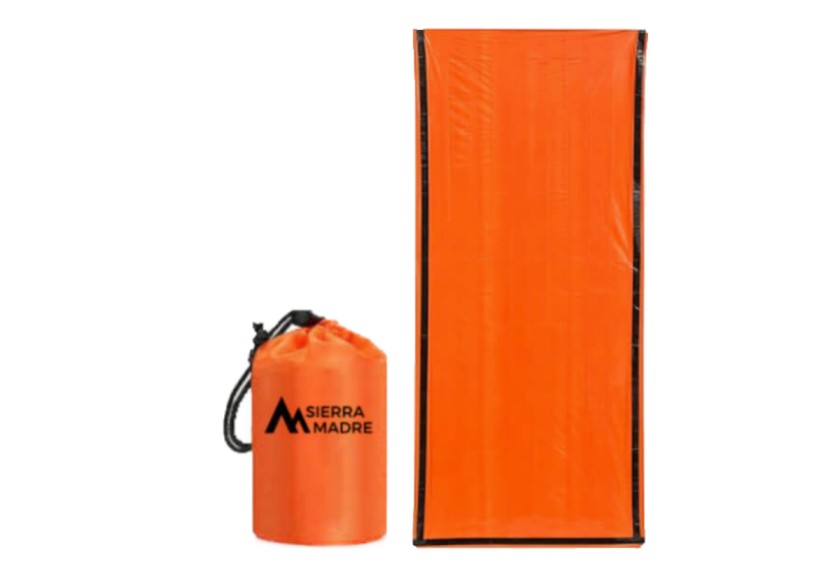
Something strange is happening in the backcountry hiking community.
Over the past few years, a quiet shift has been taking place. Experienced thru-hikers - the kind who've logged thousands of miles and know their gear better than anyone - have been removing items from their packs.
Not extra weight. Not redundant equipment.
They've been throwing away their emergency blankets.
That sounds crazy, right? Emergency gear is sacred. It's the stuff you pack and pray you never need. So why would seasoned hikers ditch theirs?
The answer traces back to a Research Mechanical Engineer who spent months traversing jungles, mountains, and rivers - and discovered the gear he trusted wasn't good enough.
What if everything we thought we knew about emergency survival gear was wrong?
The Problem Nobody Wants to Talk About
Here's what experienced hikers know that most people don't:
Emergency gear failure is more common than you think.
Search any hiking forum. Talk to rescue teams. The stories are everywhere:
- Emergency blankets that tear in minutes
- Bivvy seams that split when you need them most
- Gear that works in the store demo but fails in the field
The Three Ways Emergency Gear Fails
Failure Mode 1: The Tear
Standard mylar emergency blankets are made of material thinner than a potato chip bag. The moment stress is applied - wind, movement, a rock underneath - they tear. And once torn, a mylar blanket is just... litter.
Failure Mode 2: The Lab vs. Field Gap
That "90% heat retention" claim on cheap emergency blankets? It's measured in perfect laboratory conditions. Actual field performance with wind, moisture, and real-world stress can be significantly lower.
Failure Mode 3: The Single-Use Trap
Most cheap emergency gear is designed for one use. But emergencies don't schedule themselves. If you've used your emergency blanket once and it's destroyed, what happens next time?
The Engineer Who Refused to Accept "Good Enough"
Richard Rhett is a Research Mechanical Engineer who spent months traveling the world.
Climbing. Hiking. Mountaineering. Kayaking. Jungle traversal. River exploration.
And during those months, he was confronted with two profound problems:
Problem 1: The gear he was using didn't cut it.
Problem 2: The astounding number of people living without clean drinking water was unacceptable.
That second problem became Sierra Madre's mission: every purchase provides 1 year of clean water for someone in need.
But the first problem? That became an obsession.
"I kept asking the same question," Richard recalls. "Why does emergency gear fail? And more importantly - how do you build something that doesn't?"
The answer took years of research and testing. Not just lab testing - actual field validation across jungles, mountains, and rivers.
Sierra Madre was born in 2010.
The NASA Connection
Here's where it gets interesting.
The Emergency Sleeping Bag uses Mylar - the same material NASA developed for spacecraft insulation.
Think about that. The same thermal reflective technology that protects astronauts from temperature swings of -250°F to +250°F in space is what's protecting your body heat in the backcountry.
90% heat retention isn't a marketing number. It's physics.
Your body produces approximately 100 watts of heat at rest. The Mylar reflects that heat back to you instead of letting it escape into the cold air. Simple concept, but the engineering to make it work reliably under stress? That's where most emergency gear fails.
Sierra Madre's version is:
- Reusable (not single-use like cheap alternatives)
- Waterproof and windproof construction
- Field-tested across multiple terrain types
- Verified by 213+ customers in real conditions
What Cheap Gear Actually Costs
The $8 emergency blanket seems like a bargain until you do the math:
Scenario 1: No Emergency Needed
- Cheap blanket: $8 (single use) | Quality bivvy: $34 (100+ uses)
- Cost per use: $8 vs $0.34
Scenario 2: Minor Emergency
- Cheap blanket fails, tears in minutes: Cold, miserable night
- Quality bivvy works as designed: Verified warm at 32°F
Scenario 3: Serious Emergency
- Cheap blanket fails when you need it: Unknown outcome
- Quality bivvy keeps you warm until rescue: $34 investment, walk out under your own power
One verified buyer puts it this way:
"I bought multiple to hand out to unhoused people. As temps dropped into the 20's, these provided warmth and protection from the elements."
If it works for humanitarian outreach in 20°F conditions, it'll work for your emergency kit.